October 23, 2024
Information about timing gate system testing and how it is more beneficial over subjective assessment.

Author
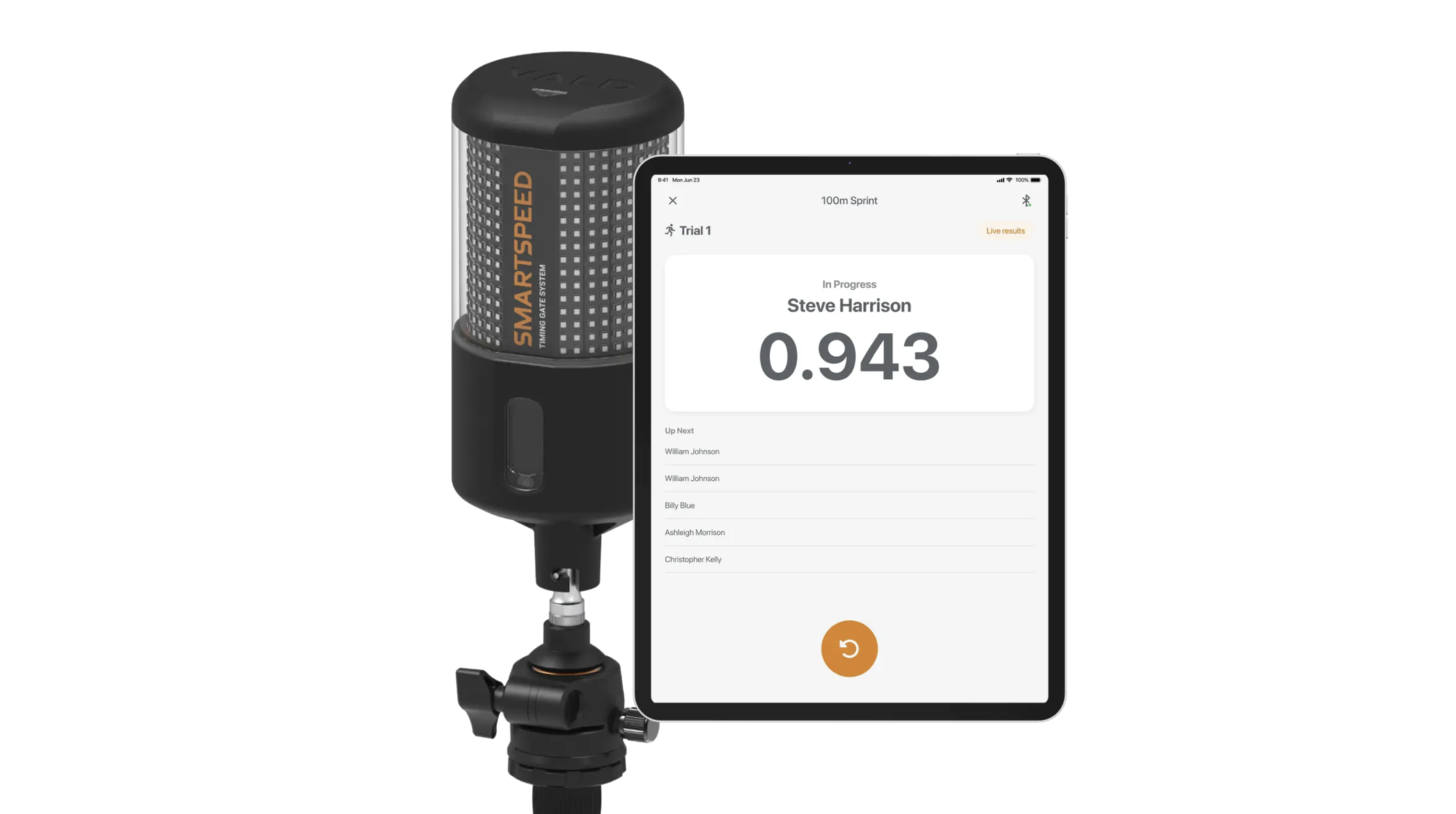
Speed is one of the most sought-after attributes in sport. Whether it’s a footballer chasing down a ball or a sprinter exploding off the line, small margins often make the difference. However, traditional methods of measuring sprint performance such as stopwatch timing or video review, leave room for human error and inconsistency.
Timing gates solve this by delivering objective, repeatable data that is accurate to the millisecond. They give coaches, therapists, and athletes a clear, unbiased picture of how fast someone is moving, how quickly they accelerate, and how efficiently they change direction. This data is crucial when making training decisions, returning an athlete to sport, or simply tracking physical development over time.
The VALD SmartDash is a wireless, portable timing gate system that uses sensors to detect when an athlete passes through specific checkpoints. It can be set up in any configuration; straight sprints, shuttle runs, agility drills, or custom speed tests while it captures performance data instantly.
Each time an athlete passes through a gate, their time is automatically recorded and transmitted to the VALD Hub, where data can be stored, reviewed, and compared. The system allows for testing multiple splits in a single run, so coaches can identify not just how fast someone is overall, but also where they accelerate, where they decelerate, and how consistent their performance is across repetitions.
Because the SmartDash is lightweight and wireless, it’s easy to deploy in a wide range of environments, from gyms and indoor tracks to outdoor pitches, making it ideal for both team settings and individual assessments.
The value of sprint and speed testing is well-supported in sports science literature. Objective timing gate systems like the SmartDash have been shown to be highly reliable and valid for assessing sprint performance and agility in both elite athletes and youth populations (Haugen & Buchheit, 2016; Altmann et al., 2015).
Research also shows that speed is a significant predictor of performance in many sports, particularly field-based ones like football, rugby, and hockey (Young et al., 2001). Split-time data, such as 5m, 10m, and 20m sprint intervals, can help identify whether an athlete needs to work on start mechanics, acceleration technique, or max velocity.
Timing gates are also useful in return-to-play decisions. Studies suggest that restoring pre-injury sprint performance is a key marker of readiness in sports such as football and rugby, and that subjective judgments can often miss subtle deficits in speed or coordination (Green et al., 2020).
Whether we’re working with an elite athlete or a member of the general population aiming to improve general fitness or neuromuscular control, the insights gained from objective speed testing can help shape more effective, individualised programming.
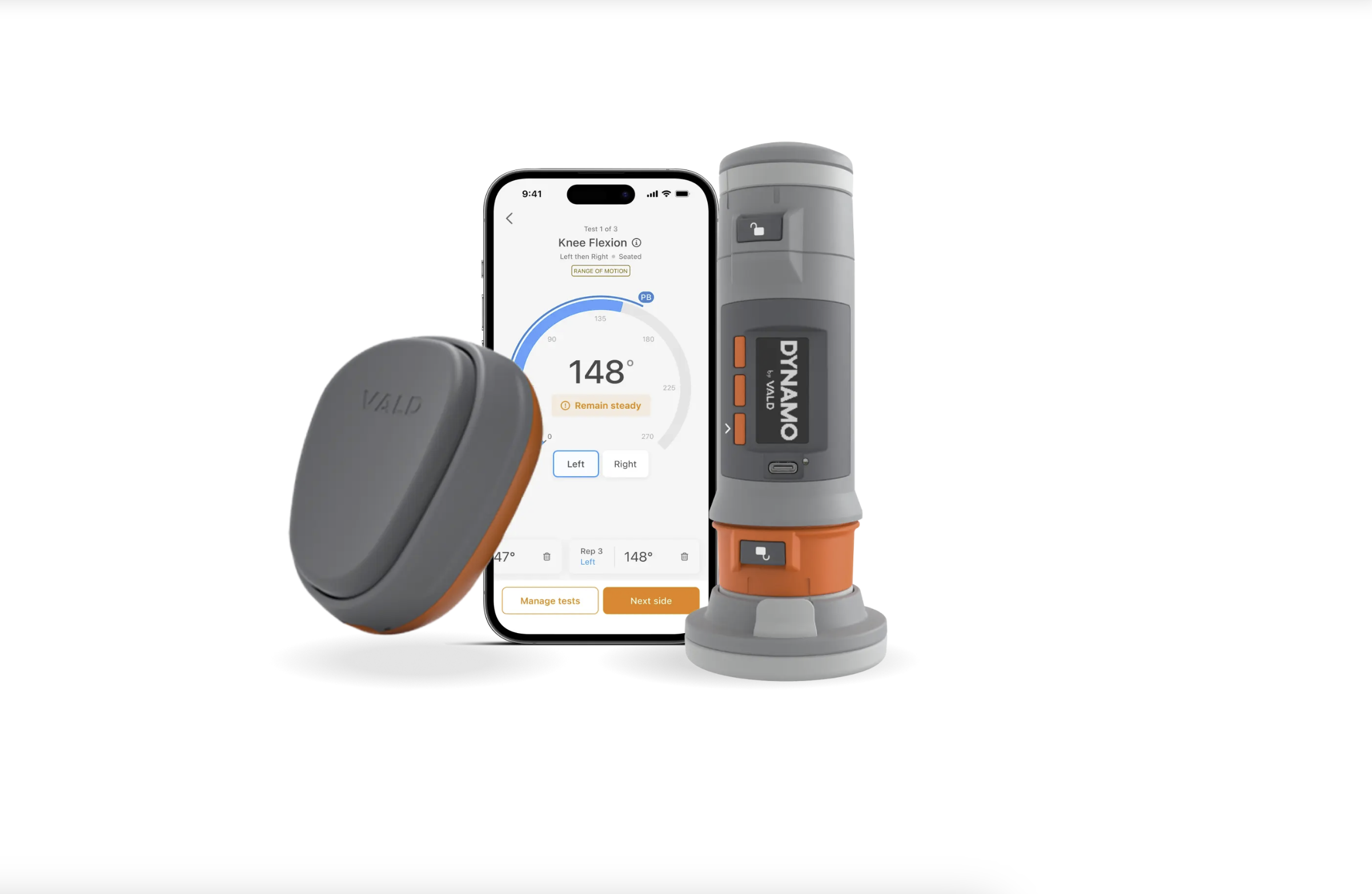
Information about strength and range of motion (ROM) testing and how it is beneficial over subjective assessment.
Information about timing gate system testing and how it is more beneficial over subjective assessment.
Become a member now and start your journey toward mastering your goals!